
Complaint Handling in Care Training
With the right approach, even a difficult complaint can lead to positive outcomes for everyone involved. This course will show you how to turn concerns into opportunities to strengthen trust, communication, and the quality of care.


Hearing a complaint isn’t easy, but every concern is a chance to grow and deliver even better care.
- Business Compliance
- 40 languages
- 30m
Learning outcomes
-
- Understand what is considered a complaint
- Understand a person’s ‘right to complain’
- Understand the role of regulators
-
Understand a person’s ‘right to complain’
-
Understand the role of regulators
Your trial awaits!
Covered in this course
Course contents
This training course is broken down into 3 sections
-
1Understanding complaints
-
2Addressing complaints
-
3Resolving complaints

Section 1
Understand what is considered a complaint, the importance of knowing why complaints matter, and why you should have a clear complaints procedure in your care business.

Section 2
Know how to best address complaints by building rapport, actively listening, using positive body language, checking your understanding of the complaint, and responding assertively to aggressive behavour.

Section 3
Understand how to best resolve complaints and issues, why you should keep records of complaints, and the importance of reflection after closing complaints to help identify improvements you could make within your care business.
About this course
Complaints are a normal part of working in the care sector — from residential and domiciliary care to healthcare and support services. What truly matters is how they’re handled. When dealt with properly, complaints can strengthen trust, improve the quality of care, and protect the reputation of your service. This Complaint Handling in Care course gives care professionals the confidence and skills to manage complaints with empathy, professionalism, and understanding.
You’ll start by exploring what counts as a complaint in a care setting and why feedback plays a vital role in maintaining high standards of care. The course then guides you through practical techniques for responding calmly and confidently, communicating with compassion, and ensuring that residents, clients, or family members feel listened to and respected.
You’ll also learn how to manage challenging situations, when and how to escalate concerns, and the importance of keeping accurate records. Finally, the course shows you how to reflect on complaints to identify lessons learned and make lasting improvements.
By the end, you’ll be equipped to turn even the most difficult complaints into opportunities for growth, helping to create a more open, responsive, and caring environment for everyone.
Other people also bought
The importance of Complaint Handling in Care
It's important that you comply with the law and understand the positive impact this training course can have on your organisation and employees.
Find out moreAvailable in 43 languages
All inclusive
Machine translated* content is included for free with all our popular courses
It covers LMS navigation, course transcripts and test questions. If you don’t see a course listed in the language you require, just let us know.
*Content which is not English may be machine translated and is for assistive purposes only. We cannot guarantee the accuracy of translations.
Our most popular languages
Your Complaint Handling in Care Training certificate
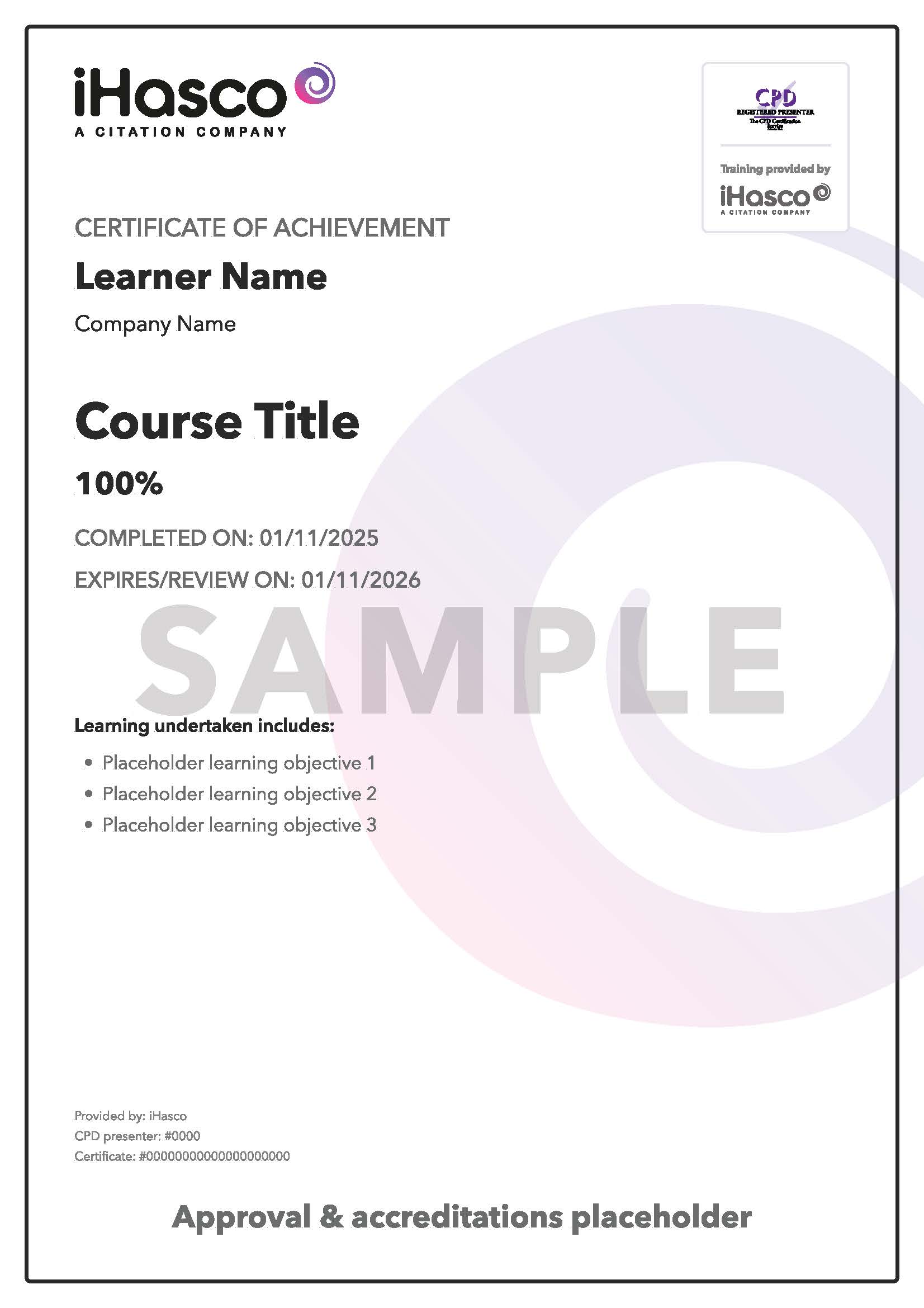
Download and print
Each of our courses ends with a multiple-choice test to measure your knowledge of the material.
This Complaint Handling in Care Training course concludes with a 20 question multiple choice test with a printable certificate. In addition, brief in-course questionnaires guide the user through the sections of the training and are designed to reinforce learning and ensure maximum user engagement throughout.
As well as printable user certificates, training progress and results are all stored centrally in your LMS (Learning Management System) and can be accessed any time to reprint certificates, check and set pass marks and act as proof of a commitment to ongoing legal compliance.
What does my certificate include?
Your Complaint Handling in Care Training Certificate includes your name, company name (if applicable), name of course taken, pass percentage, date of completion, expiry date and stamps of approval or accreditations by recognised authorities.
Please note if you are using our course content via SCORM in a third party LMS then we are unable to provide certificates and you will need to generate these in your host LMS yourself.
2 real user reviews
5.0
out of 5
Loading reviews…
Very informative
This user gave this course a rating of 5/5 stars
excellent course
covered all points expected of the course. clear and precise.
Why is this training important?
Compliance
Complaints are a natural part of working in care — they happen in every setting, no matter how dedicated or skilled the team. If they aren’t handled well, they can damage trust between staff, residents, families, and the wider community. But when managed properly, complaints can actually strengthen relationships and highlight opportunities to improve the quality of care and support we provide.
This course is important because it shows you how to respond to concerns and complaints calmly, professionally, and with compassion. You’ll learn how to prevent small issues from becoming bigger problems, how to take responsibility when things go wrong, and how to show people that their experiences and feelings genuinely matter. By handling complaints effectively, you can build trust with service users and families, identify areas for improvement early, and help create a more open and supportive care environment.
Most importantly, this training will give you the confidence to approach complaints with empathy and professionalism — turning difficult situations into chances to learn, grow, and deliver even better care.
Related articles


Business Compliance
Common cyber security threats your business should look out for
Last updated 10 Jun 2026


Business Compliance
World Environment Day: Top tips for making your workplace more eco-friendly
Last updated 9 Oct 2025

