
What are the most high-risk foods?
26 min read | Posted 22 Jun 2018, Last updated 13 Nov 2026
Written by
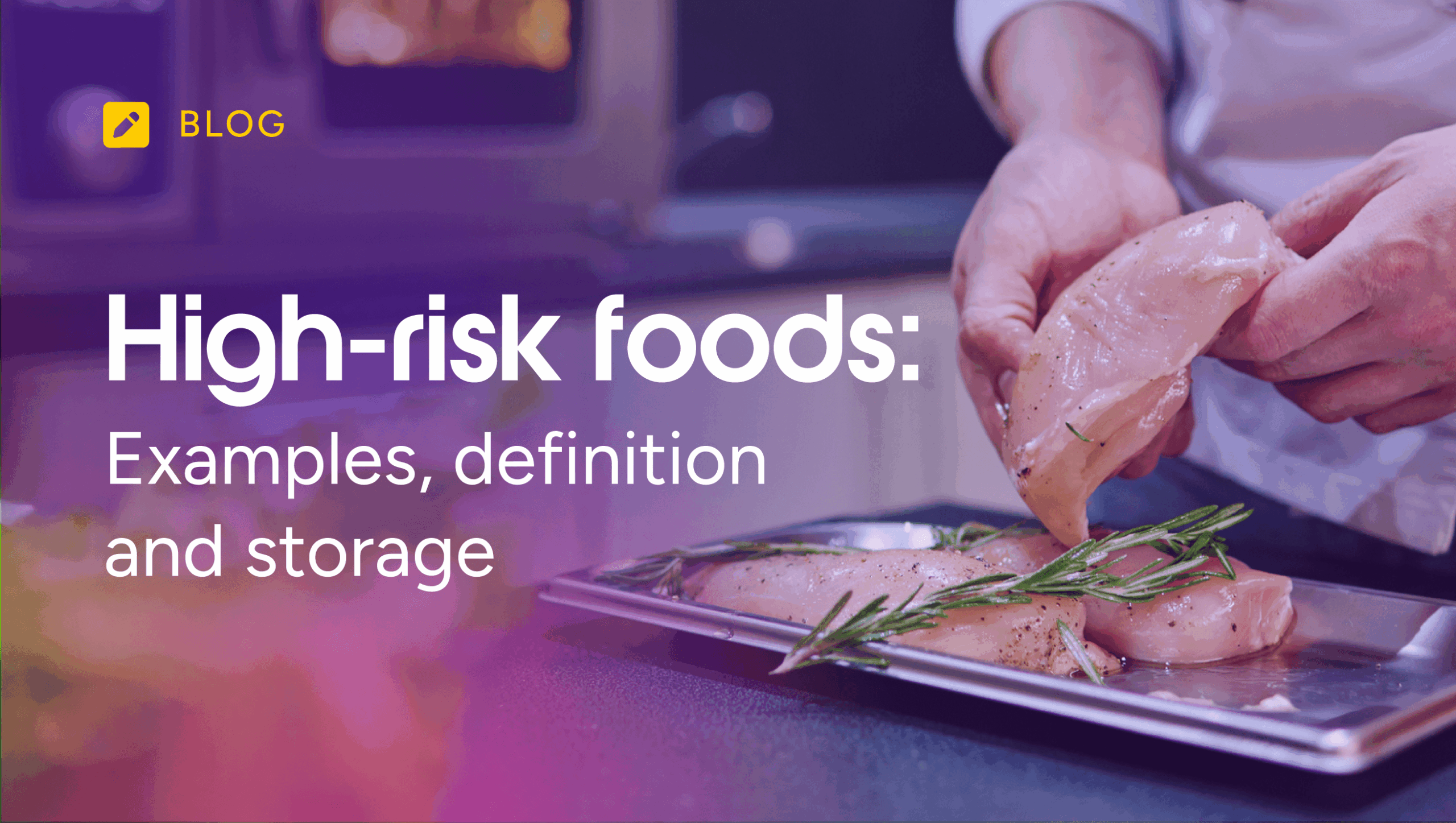
A high-risk food is a ready-to-eat food that won’t be cooked again before it’s eaten, and that gives harmful bacteria the moisture, protein and warmth they need to multiply, according to Food Standards Agency guidance. Common examples include cooked meat, dairy, shellfish, and cooked rice or pasta. Under UK law, these foods must be stored below 8°C to stop bacteria reaching dangerous levels.
What are high-risk foods?
A high-risk food is one that’s ready to eat, needs no further cooking, and provides the conditions bacteria need to grow. Raw chicken can carry bacteria too, but it isn’t high-risk on its own; it only becomes high-risk once it’s cooked and meant to be eaten without any further heat step. That’s the test worth applying to any food: has it already had its cooking step, and is it now sitting there ready to be eaten?
Getting this wrong has a real cost. The Food Standards Agency estimated that food caused around 2.4 million cases of illness in the UK every year, in research published in June 2022. Not all of these trace back to high-risk foods specifically, but poor handling of exactly the foods on this page account for a large share of them.
Four things make a food high-risk:
- Moisture. Bacteria need water to grow. Cooked rice, soft cheese and ready-made salads all hold enough moisture to support that growth.
- Protein. Meat, poultry, eggs and seafood give bacteria the fuel they multiply on.
- A neutral or slightly acidic pH. Cooked meats and soft cheeses sit in the pH range bacteria prefer. Pickled or highly acidic foods don’t.
- No further cooking step. Cold meats, sandwiches and desserts are eaten as they are, so there’s no final heat stage to kill off anything that’s grown.
Food doesn’t need all four to be high-risk, but the more it has, the faster bacteria can multiply on it.
Examples of high-risk foods
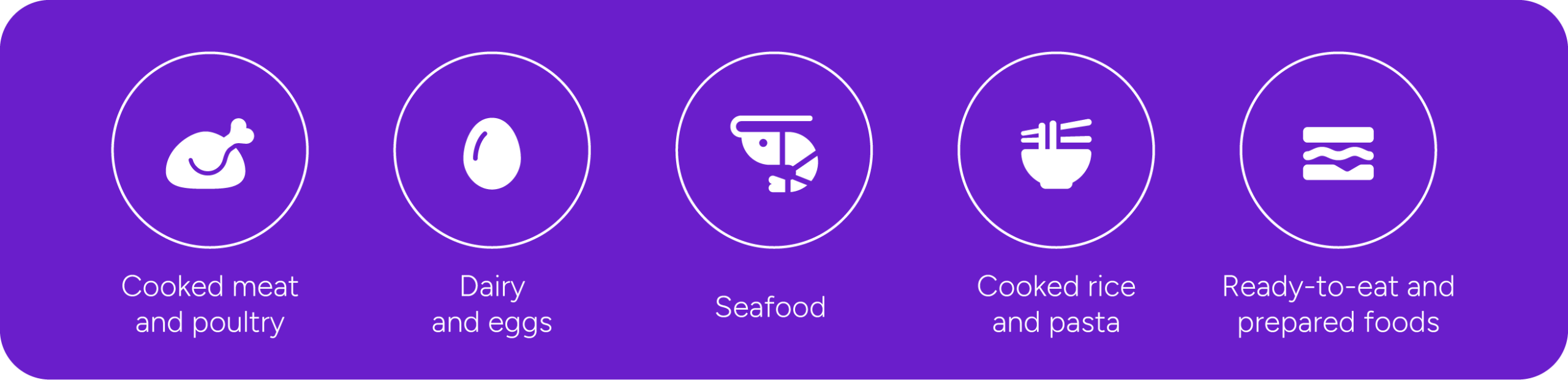
Cooked meat and poultry
- Cooked meats such as roast chicken and sliced ham, once cooled below the temperature needed to keep bacteria in check. The cooking step that made them safe to eat has already happened, so nothing further will kill off bacteria that lands on them afterwards.
- Poultry, raw or cooked, which can carry Salmonella and Campylobacter. Cooked poultry needs the same chilled storage as any other cooked meat.
Dairy and eggs
- Milk, cream and soft cheeses, particularly if unpasteurised. Pasteurisation reduces the bacterial load but doesn’t remove the need for proper chilling afterwards.
- Eggs that aren’t Lion-marked, which can carry Salmonella. Lion-marked eggs come from flocks vaccinated against Salmonella, which is why UK food safety guidance treats them differently from unmarked or imported eggs.
Seafood
- Shellfish such as mussels and oysters, which absorb bacteria and viruses from the water they’re grown in. This is why sourcing from a reputable, traceable supplier matters as much as storage temperature.
- Smoked fish, which needs refrigeration despite being preserved, and can carry Listeria monocytogenes.
Cooked rice and pasta
- Cooked rice and pasta, both of which can develop Bacillus cereus once cooled at room temperature; reheating doesn’t reliably make either safe again, because the bacterium forms heat-resistant spores that survive normal cooking and reheating temperatures.
Ready-to-eat and prepared foods
- Cold meats and pâté, eaten straight from the fridge
- Pre-made salads, coleslaw and sandwiches that combine several high-risk ingredients in one product
- Pre-prepared desserts such as trifle and cream cakes, which combine dairy with a chilled shelf life
High-risk versus low-risk foods
Low-risk foods don’t support bacterial growth in the way high-risk foods do, because they’re dry, high in acid, or high in sugar. Bread, dried pasta, tinned goods and jam are all low-risk because bacteria simply can’t get the water or nutrients they need from them.
| High-risk foods | Low-risk foods | |
| Moisture | High | Low |
| Storage | Refrigerated, below 8°C | Room temperature |
| Examples | Cooked meat, dairy, shellfish, cooked rice | Bread, tinned food, dried pasta, jam |
| Further cooking needed? | No, ready to eat | Not applicable, or bacteria can’t grow regardless |
Cooking status can move food between the two categories. Raw meat and poultry are handled with care because of the bacteria they can carry, but they aren’t classed as high-risk until they’ve been cooked; the cooking step is what’s meant to remove the risk, and it’s only a problem again once that food is treated as ready to eat.
Common types of harmful bacteria found in high-risk foods
Bacteria can spread quickly on high-risk food, so knowing which ones to guard against, and where they typically come from, helps target the handling steps that matter most.
- Campylobacter. The most common cause of food poisoning in the UK, usually from undercooked poultry. Symptoms typically include diarrhoea and stomach cramps, and most cases clear up within a week without treatment.
- Salmonella. Spread through contamination or undercooking, and linked to raw or undercooked eggs and meat. The Food Standards Agency’s 2018 burden-of-disease modelling put UK cases at around 32,000 a year.
- Escherichia coli O157 (E. coli). Can cause fatal harm in elderly people and young children, and is particularly associated with undercooked beef and unpasteurised dairy. Thorough cooking of meat prevents it.
- Listeria. Found in raw milk, milk products and processed meats. It can survive fridge temperatures and is only killed by cooking, which makes it harder to control than most. Confirmed UK cases run into the low hundreds each year, but Listeria carries a higher fatality rate than any of the other bacteria on this list, and pregnant women and older adults are advised to take particular care with foods such as soft cheese and cold-smoked fish.
- Clostridium perfringens. Common in large batches of food kept warm for extended periods before serving, which is why catering settings see it most often.
For more on preparing food to avoid spreading these, see our guide to the four C’s of food safety and our post on how many times you can safely reheat food.
How does contamination occur, and how can it be prevented?
Contamination can happen at any stage, from preparation through to serving.
Common causes:
- Cross-contamination: bacteria spreading from one surface or food to another, such as using the same chopping board for raw chicken and a ready-to-eat salad without cleaning it in between
- Poor temperature control: food left in the danger zone, between 8°C and 63°C, where bacteria can multiply fast
- Poor storage: raw and cooked food stored together, or stock not rotated on a first-in, first-out basis
- Poor personal hygiene: unwashed hands or uncovered cuts introducing bacteria directly into food
How to prevent it:
- Use separate equipment for raw and cooked food. Colour-coded chopping boards, such as red for raw meat and green for vegetables, make this easy to enforce.
- Keep cold food below 8°C and hot food above 63°C. Store raw food below cooked food in the fridge so nothing drips down onto it.
- Clean surfaces and hands regularly, especially after handling raw food. A visible cleaning rota helps everyone see what’s been done and when.
- Rotate stock on a first-in, first-out basis. Check use-by dates regularly and move older stock to the front so it gets used before anything newer.
- Keep training current. Anyone handling food should hold up-to-date food safety training so they understand these steps and can act on them without having to check.
How should high-risk foods be stored?
High-risk foods must be kept below 8°C when chilled, under the Food Safety and Hygiene (England) Regulations 2013 (Schedule 4). This is the legal ceiling, not the target. Most food businesses run fridges at 5°C or below to leave room for door openings and delivery loads before the food itself gets anywhere near 8°C.
Hot food that’s been cooked or reheated must be held at 63°C or above if it’s being served or displayed. Anything between 8°C and 63°C is what the Food Standards Agency calls the danger zone, the range in which bacteria multiply fastest.
A few storage rules worth building into any routine:
- Cool cooked food quickly, then refrigerate it. Don’t leave it standing at room temperature.
- Store food in sealed containers, labelled with the date.
- Keep raw and ready-to-eat food on separate shelves, raw at the bottom.
- Use a probe thermometer to check fridge and food temperatures rather than relying on the dial.
The gap between the 8°C legal limit and the 5°C working target exists for a reason. A fridge holding steady at 8°C has no room to absorb a warm delivery going in or the door being opened through a busy service, so it can tip over the legal limit without anyone noticing. Running the fridge closer to 5°C keeps that margin in hand.
Freezing is another safe option for high-risk food you won’t use straight away. A domestic or commercial freezer running at -18°C or below stops bacteria multiplying, though it doesn’t kill any that are already present, so food still needs to be defrosted properly and cooked or reheated thoroughly once it comes out. As a general rule, high-risk ready-to-eat food should be used within three days of being cooked or opened, counting the day it was made as day one, unless you have specific evidence that it keeps safely for longer.
Frequently asked questions
What are 5 high-risk foods? Cooked meat, dairy products, shellfish, cooked rice and ready-to-eat salads are five common examples. All five support bacterial growth once cooked or prepared, and none of them get another cooking step before they’re eaten.
Is pasta a high-risk food? Cooked pasta is high-risk. Once cooled at room temperature, it can develop Bacillus cereus, the same bacterium found in cooked rice. Dry, uncooked pasta is low-risk because it doesn’t hold enough moisture to support bacterial growth.
Are potatoes a high-risk food? Raw potatoes are low-risk on their own. Once cooked and combined with other ingredients, such as in a potato salad made with mayonnaise, they take on the risk profile of whatever they’re mixed with and need the same chilled storage as other high-risk foods.
What foods are not considered high-risk? Dry, acidic or high-sugar foods that don’t support bacterial growth, such as bread, tinned goods, dried pasta and jam. These can be safely stored at room temperature.
Why is raw chicken not classed as a high-risk food? Raw chicken isn’t classed as high-risk because it’s meant to be cooked before it’s eaten, and cooking is what removes the bacteria. It becomes high-risk only once it’s cooked and being kept as a ready-to-eat food.
What temperature should high-risk food be kept at? High-risk food must be kept below 8°C when chilled and above 63°C when hot-held, under the Food Safety and Hygiene (England) Regulations 2013. Most kitchens run fridges at 5°C or below to build in a margin for the temperature rising during service.
How long can high-risk food be left out of the fridge? High-risk food can be left out of the fridge for up to four hours, according to Food Standards Agency guidance on chilling food. After that, it should either be eaten, thrown away, or put back into the fridge, and it shouldn’t be left out a second time.
Food Safety & Hygiene Training
iHasco offers three online Food Safety & Hygiene Training courses:
- Food Safety & Hygiene Level 1 Training
- Food Safety & Hygiene Level 2 Training
- Food Safety & Hygiene Level 3 Training
Level 1 and 2 suit anyone working where food is made, sold or served, including those studying for a Level 2 food hygiene qualification. Level 3 is built for managers and supervisors who need a more advanced grasp of the detail.
We also run an Online Food Allergy Awareness Training course covering allergens, food law and cross-contamination. All our food-related courses carry IOSH approval. Try one for free today.

Charlotte Dibley
Senior Scriptwriter