
Manual Handling Training
This online manual handling training course will teach you all you need to know about safe manual handling. It includes information on the lifting techniques, ‘LITE’ and ‘TILE’, and explains the importance of safe manual handling. Correct manual handling is so important to everyday health, especially if you’re regularly lifting. Providing training on safe carrying and lifting techniques in the workplace is a legal requirement in any situation where your staff are required to do any lifting, lowering, pulling, or pushing as part of their job.



Incorrect handling, lifting and carrying causes around 21% of all non-fatal workplace injuries
- Health & Safety
- 40 languages
- 35m
Learning outcomes
-
Learn how to lift safely, using techniques such as ‘LITE’ and ‘TILE’
-
Learn how to carry out ‘LITE’ assessments to reduce the risk of injury
-
Learn how to correct bad postural habits and how to work in the ‘Power Zone’
Your trial awaits!
Covered in this course
Course contents
This training course is broken down into 4 sections
-
1Your back during Manual Handling
-
2Daily Tasks
-
3LITE Assessment
-
4Techniques
Section 1
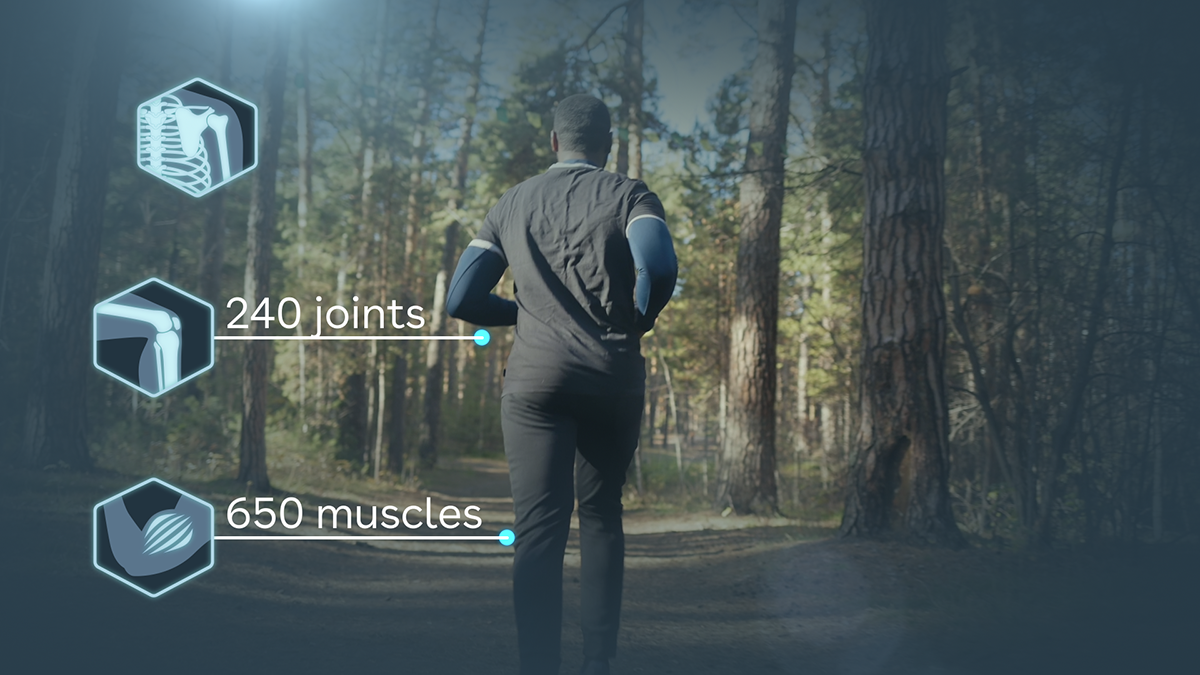
The introduction to our course covers your back – what it’s made up of, how it works, how flexible and strong it is, but also how fragile it can be if it’s not look after. It explains what damage can be done with poor lifting techniques, and it offers an interesting insight into why children naturally lift objects correctly.

Section 2
The second section of our Manual Handling Training explains how you can prevent aches, pains and more severe damage by maintaining a healthy back daily. It covers correct (neutral) manual handling postures, working in the Power Zone, and breaking bad postural habits.

Section 3
Before you begin any Manual Handling task, you need to complete a LITE assessment to reduce the risk of injury. This section takes you through the four different stages (Load Individual Task Environment) and provides you with additional advice about what to do about manual handling hazards and risks.

Section 4
Our fourth and final section provides step-by-step demonstrations on how to carry out various types of lift – from the floor, waist height, and head height; it takes you through a two-stage lift, team lift, and loading a trolley too. This section also covers the Golden Rules of Manual Handling and safe workplace lifting.
About this course
Incorrect manual handling is responsible for more than a third of all workplace injuries that are reported to authorities each year.
If manual handling is not carried out properly it can have significant consequences on your health (musculoskeletal disorders), mainly if you carry out manual handling operations regularly. A manual handling risk assessment may be in order depending on if your workplace is handling heavy loads.
Maintaining a healthy back is also vital in enabling you to meet the demands of your everyday responsibilities – at work, at home, and during your leisure time. This training equips you with all the tools you need to protect your back whilst conducting a wide variety of Manual Handling tasks. This course looks at safe moving and handling, the ‘LITE’ technique (Load. Individual. Task. Environment.), and explains why safe workplace lifting is so important to your everyday health.
Effective Manual Handling Training can help in ensuring best practice and reduces the likelihood of injuries as a direct result of manual handling. Our IOSH & RoSPA Approved Manual Handling training is for all levels of staff that undertake manual handling operations and it takes just 35 minutes to complete.
Every employee in every company that regularly carries out manual handling should have effective Manual Handling Training and it doesn’t have to be boring, time-consuming or expensive! Just ask us for a free no-obligation trial today!
Not quite what you were looking for? Did you mean Manual Handling including tyres or Moving and Handling People?
Avoiding absences with effective manual handling eLearning
Find out more about how our Manual Handling training helps organisations avoid absences and why it’s so highly rated by our users.


Presented by
Other people also bought
The importance of Manual Handling Training
It's important that you comply with the law and understand the positive impact this training course can have on your organisation and employees.
Find out moreAvailable in 40 languages
All inclusive
Machine translated* content is included for free with all our popular courses
It covers LMS navigation, course transcripts and test questions. If you don’t see a course listed in the language you require, just let us know.
*Content which is not English may be machine translated and is for assistive purposes only. We cannot guarantee the accuracy of translations.
Our most popular languages
Manual Handling Training certificate

Download and print
Each of our courses ends with a multiple-choice test to measure your knowledge of the material.
This Online Manual Handling training programme ends with a 20 question multiple choice test with a printable certificate.
As well as printable user certificates, training progress and results are all stored centrally in your LMS (Learning Management System) and can be accessed any time. From there, you can re-print certificates; check and set pass marks and use the system as proof of commitment to ongoing legal compliance.
What does my certificate include?
Your Manual Handling Certificate includes your name, company name (if applicable), name of course taken, pass percentage, date of completion, expiry date and stamps of approval or accreditations by recognised authorities.
Please note if you are using our course content via SCORM in a third party LMS then we are unable to provide certificates and you will need to generate these in your host LMS yourself.
4,995 real user reviews
4.8
out of 5
Loading reviews…
5
Thanks so much
Clear with practical guidance
I found the Manual Handling online course clear and informative, providing practical guidance on how to safely lift, carry, push and pull items while reducing the risk of injury. The visuals were easy to follow and memorable, and the accompanying handouts are clear and useful. The step-by-step guidance was straightforward and easy to understand, making the course practical and relevant to everyday manual handling tasks.
Excellent and practical
I learned a lot of things I did not know. Very useful!
Very good
Very informative and easy to follow
VERY CLEAR AND HIGH PRACTICAL TRANING
This Manual Handling Training module was highly effective and easy to navigate. It clearly explained vital ergonomic principles, such as maintaining a neutral posture, using the power zone, and assessing hazards along a route. The practical examples and safety rules, including team lifting coordination, provided actionable knowledge that I can easily apply to prevent injuries in my daily workplace routine
good refresher
This user gave this course a rating of 5/5 stars
Very good course.
This user gave this course a rating of 5/5 stars
Very effective course
I thought this course was very easy to follow, very clear and asked some very good questions. It really made me think about manual handling. I actually enjoyed doing the course too!
Why is this training important?
Compliance
It’s important that you comply with the law and know the ways in which it affects you and the way you work.
Under The Manual Handling Operations Regulations 1992 Manual Handling is taken to include the lifting, lowering, pushing, pulling, carrying and movement of anything by hand or bodily force. The Management of Health & Safety at Work Regulations 1999 (13(2)) also require that every employer must ensure that their employees are provided with adequate health and safety training.
Council Directive 90/269/EEC of 29th May 1990 on the minimum health and safety requirements for the manual handling of loads where there is a risk particularly of back injury to workers
What does manaual handling training mean for my company?
Providing manual handling training means that your business will be kept safe from any liability which may arise from untrained staff. These accreditations also mean that you adhere to multiple regulations regarding manual handling.
Employers must ensure that workers receive proper training and information on how to handle loads correctly and the risks they might be open to – mainly if these tasks are not performed correctly.
Employers must ensure that workers receive proper training and information on how to handle loads correctly, and the risks they might be open to – particularly if these tasks are not performed correctly
The Benefits of Manual Handling Training
Providing manual handling training to employees can offer several benefits for both workers and employers. Here are some of the top advantages of manual handling training:
Reduced Risk of Injury: Manual handling training can help employees learn how to lift, move, and handle objects in a safe and efficient manner, reducing the risk of injury and MSDs.
Improved Workplace Safety: By providing manual handling training, employers can create a safer working environment and reduce the number of accidents and injuries in the workplace.
Increased Productivity: Proper manual handling techniques can help employees work more efficiently, reducing the time and effort required to complete tasks and increasing productivity.
Compliance with Regulations: Many countries have specific regulations and guidelines related to manual handling, and providing training can help employers comply with these requirements.
Improved Employee Satisfaction: When employees feel confident and safe in their work, they are more likely to be satisfied with their job and perform better.
Frequently asked questions
-
To maintain the highest possible training quality, all of our online manual handling courses are accredited by the Continuing Professional Development (CPD) certification service and approved by the Institute of Occupational Safety and Health (IOSH). Both IOSH and CPD-accredited qualifications are also internationally recognised.
-
This course takes just 35 minutes to complete and can be completed on any device.
-
This course is designed to serve anyone who is required to lift and carry as part of their daily work activities. This can include logistics staff, warehouse workers, heavy manual labourers, construction and building site workers, office staff who carry out regular lifting, delivery drivers and farmers/agricultural workers.
-
Everyone who completes this online course will receive a manual handling certificate and progress will be stored online. This means you’ll easily be able to access proof of your Health and Safety measures when it’s time to start the application process. This is also useful for Health and Safety audits and inspections. Our online manual handling course is also useful for businesses that are working towards SSIP accreditation. Whether you’re looking to obtain a SMAS, SafeContractor, ConstructionLine, or CHAS certification, you’ll need to gather evidence of your organisation’s commitment to Health and Safety and the control measures and training you have in place.
-
Manual Handling training is not mandatory for all staff. Training is only applicable for those who regularly carry out manual handling. Where manual handling involves a risk of injury the employer needs to act.
-
Incorrect manual handling is the cause of more than a third of all non-fatal workplace injuries. Effective training can help ensure best practices and reduces the likelihood of injuries as a direct result of manual handling.
-
Yes, as with any iHasco course, you can try it for free at any time without obligation.
-
Common manual handling mistakes are prevalent through any business. They occur when members of staff do not follow proper lifting techniques or fail to recognise the potential lifting hazard. Some of the most common manual handling mistakes include lifting heavy loads alone, twisting the body while lifting, carrying objects too far away from the body, and failing to use lifting aids when available. What to take into account: – Common manual handling mistakes can include lifting heavy loads alone, twisting the body while lifting, carrying objects too far away from the body, and failing to use lifting aids when available. – These mistakes can lead to serious injuries, including sprains, strains, and herniated discs. – It is important to receive proper manual handling training to prevent these mistakes and reduce the risk of workplace injuries.
-
Making manual handling mistakes can result in serious injuries and health problems. Common injuries from manual handling mistakes include sprains, strains, and herniated discs. These injuries can cause long-term pain, limit mobility, and even require surgery. Additionally, making manual handling mistakes can lead to increased healthcare costs and lost productivity. When staff are not trained appropriately, they are opened up to serious injuries and health problems. Common injuries which may occur from manual handling mistakes can include :sprains, strains and herniated discs, which can cause long-term damage and pain, limit mobility and may even require surgery. Not only that but the liability of improper manual handling techniques can cost your business thousands. What to take into account: – Making manual handling mistakes can result in serious injuries and health problems, including sprains, strains, and herniated discs. – These injuries can cause long-term pain, limit mobility, and even require surgery. – Making manual handling mistakes can lead to increased healthcare costs and lost productivity.