
COSHH symbols and their meanings: a complete guide
28 min read | Posted 17 Sep 2018, Last updated 4 Sep 2026
Written by
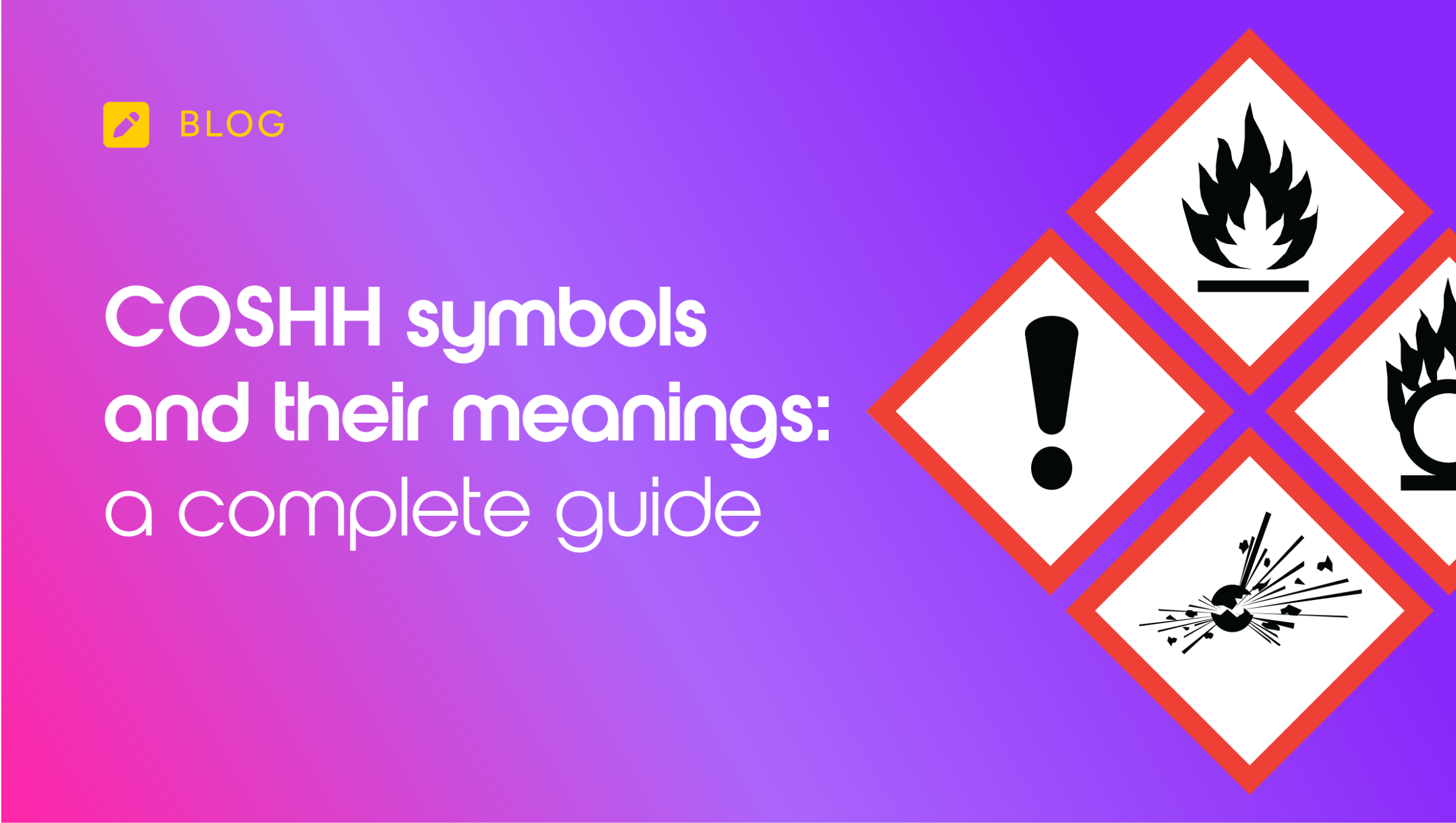
Quick answer: There are 9 COSHH symbols (also known as CLP hazard pictograms) used in the UK to identify dangerous substances. Each symbol is a white diamond with a red border, containing a black pictogram. Knowing what they mean is essential for anyone who works with hazardous substances.
If you work with hazardous substances, you’ve almost certainly seen these symbols on product labels, containers, and Safety Data Sheets. But do you know what each one actually means? Being able to read COSHH symbols correctly isn’t just good practice, it’s a legal requirement, and it could prevent a serious accident. For a more comprehensive understanding of COSHH responsibilities and hazardous substance handling, see our COSHH training course.
From paints and cleaning products to industrial chemicals and compressed gases, hazardous substances are present in workplaces across every sector. The symbols on their labels are your first and fastest clue to the risks involved, including what protective equipment to use, how to store the substance safely, and what to do if something goes wrong.
This guide covers all 9 COSHH symbols, what they mean in detail, the products they’re most commonly found on, and how the current symbols compare to the old orange CHIP symbols you might still encounter on older stock.
What are COSHH symbols?
COSHH stands for Control of Substances Hazardous to Health. The symbols used on hazardous products in the UK are part of the CLP Regulation (Classification, Labelling and Packaging of substances and mixtures), which is based on the Globally Harmonized System (GHS) — an internationally agreed framework for classifying and communicating chemical hazards.
The purpose of the system is simple, and that’s to make hazard communication consistent and instantly recognisable, wherever you are. The symbols are standardised, which means training transfers across borders and industries. A worker in a UK warehouse and a technician in a German laboratory will recognise the same pictograms.
Each CLP symbol takes the form of a white diamond with a bold red border, containing a black pictogram. The design is deliberately distinctive, so it stands out on a label even if the text is small or in another language. You’ll find the symbols on product packaging, storage containers, tankers, and Safety Data Sheets (SDS).
From CHIP to CLP: what changed and why
Before 2015, the UK and Europe used a different system called CHIP (Chemicals Hazard Information and Packaging for Supply). CHIP symbols were orange squares tilted on their corners, with black pictograms.
The CLP Regulation replaced CHIP in stages, with full implementation completed in 2017. The new symbols are white diamonds with red borders which are more visible, more distinctive, and aligned with the international GHS system.
Key things to know about the changeover:
- The old orange symbols are no longer legally valid for new products
- You may still encounter old symbols on legacy stock or older equipment, so it’s worth knowing both
- Some new symbols replaced multiple old ones, while others (like Gas under pressure) were added fresh
- The skull and crossbones symbol was split – it now covers only the most acutely toxic substances, with a separate exclamation mark symbol covering lower-level hazards
If you spot an old orange symbol on a product, check whether it’s still in active use or old stock. Either way, treat the substance with appropriate caution.
The 9 COSHH symbols explained
Here’s a detailed breakdown of each symbol, what it covers, and where you’re most likely to encounter it.
1. Explosive
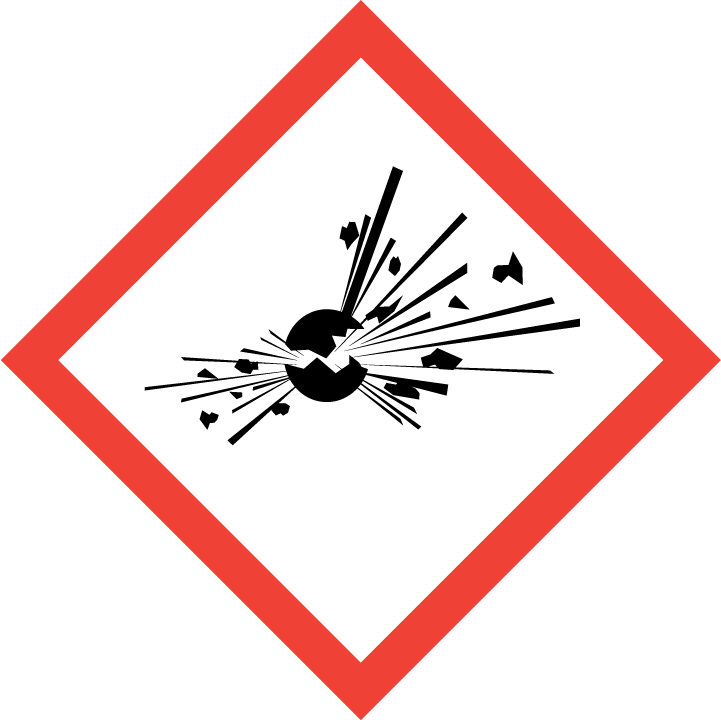
This symbol can indicate:
- Unstable explosive
- Explosive, division 1.1
- Explosive, division 1.2
- Explosive, division 1.3
- Explosive, division 1.4
- Self-reactive substances and mixtures, types A and B
- Organic peroxides, types A and B
Commonly found on: Fireworks, certain industrial chemicals, airbag inflators, some mining and demolition materials
2. Flammable
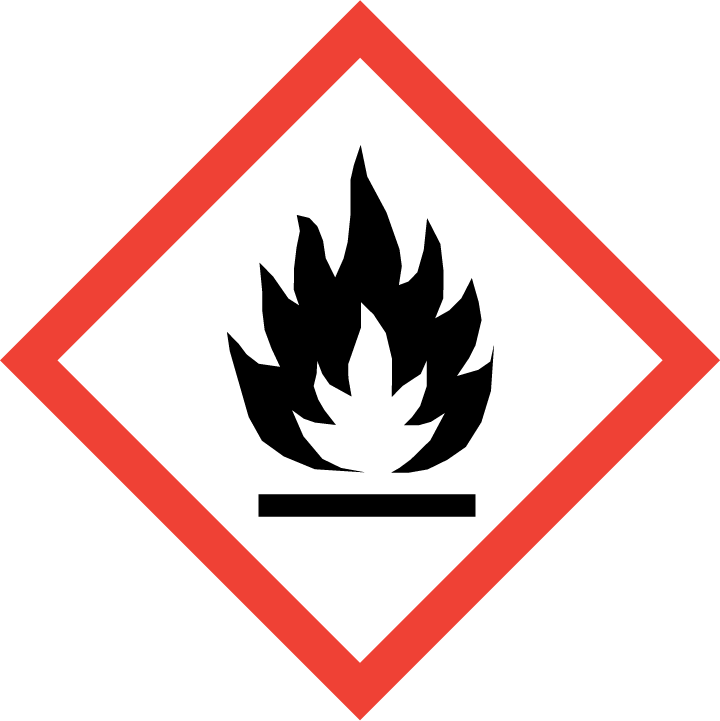
This symbol can indicate:
- Extremely flammable gas
- Flammable gas
- Extremely flammable aerosol
- Flammable aerosol
- Highly flammable liquid and vapour
- Flammable liquid and vapour
- Flammable solid
Commonly found on: Paints, solvents, aerosol sprays, cleaning products, adhesives, petrol, lighter fluid
3. Oxidising
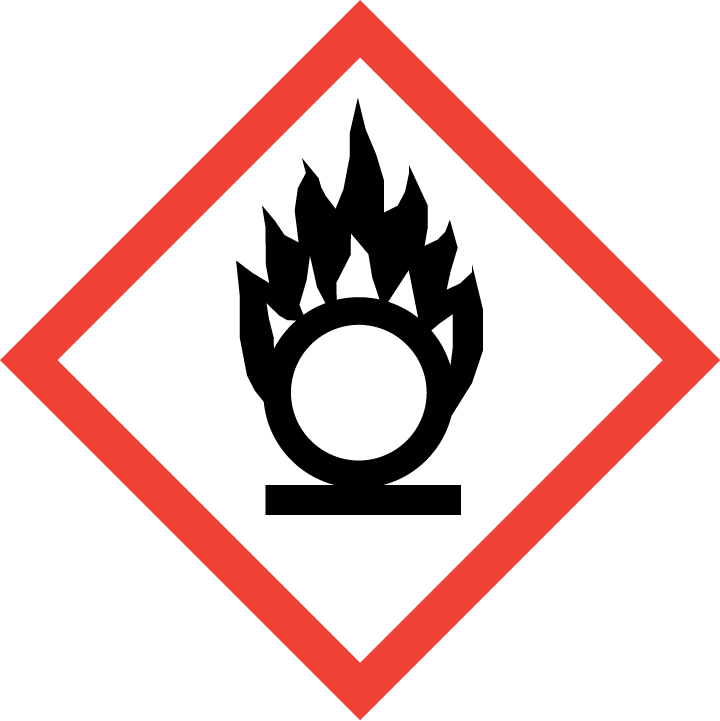
This symbol can indicate:
- Oxidising gas
- Oxidising liquid
- Oxidising solid
Commonly found on: Bleach, hydrogen peroxide, fertilisers, some industrial cleaning products, pool chemicals
4. Corrosive
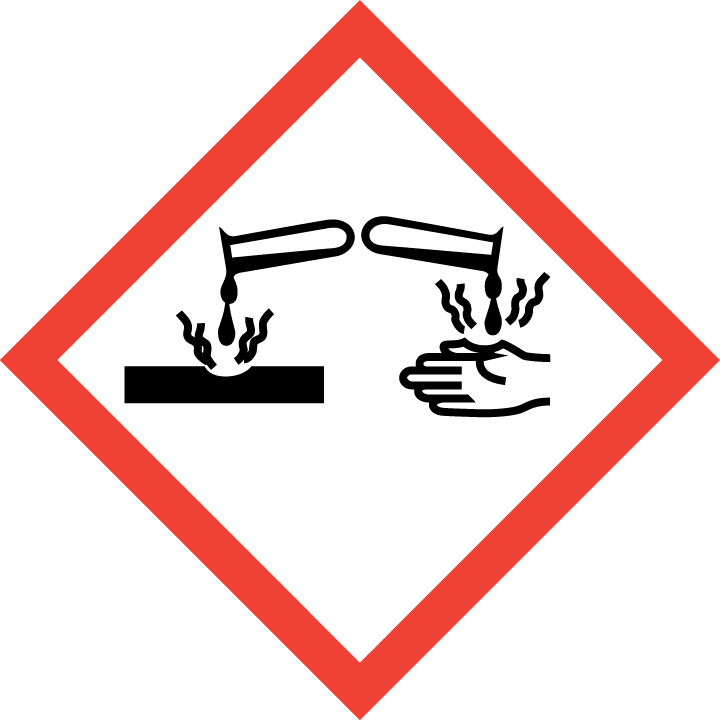
This symbol can indicate:
- Skin corrosion (Category 1A, 1B, 1C)
- Serious eye damage (Category 1)
- Corrosive to metals
Commonly found on: Drain cleaners, oven cleaners, battery acid, industrial descalers, certain laboratory reagents
5. Acute toxicity (toxic skull and crossbones)
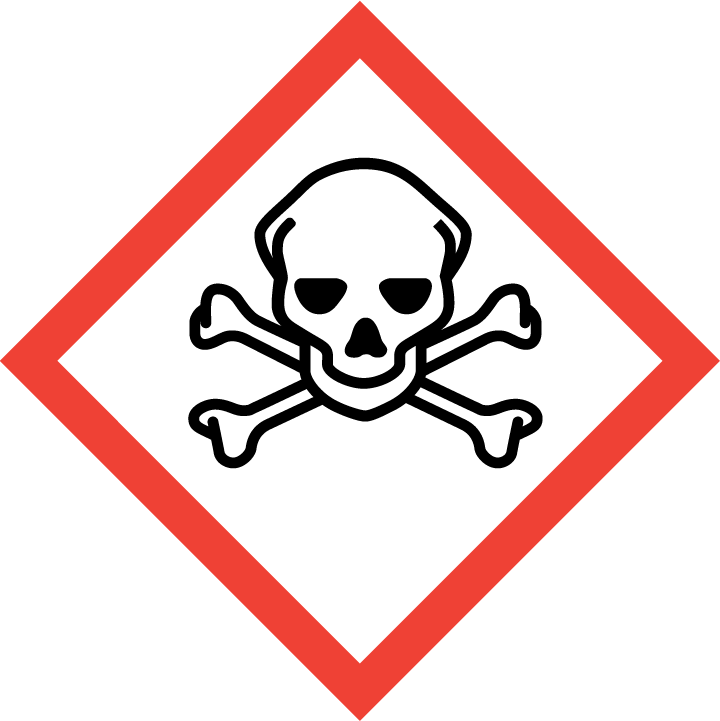
This symbol can indicate:
- Acute toxicity, oral (Category 1, 2, 3)
- Acute toxicity, dermal (Category 1, 2, 3)
- Acute toxicity, inhalation (Category 1, 2, 3)
Commonly found on: Certain pesticides, industrial chemicals, some laboratory substances, heavy-duty cleaning agents
6. Health hazard (exclamation mark)
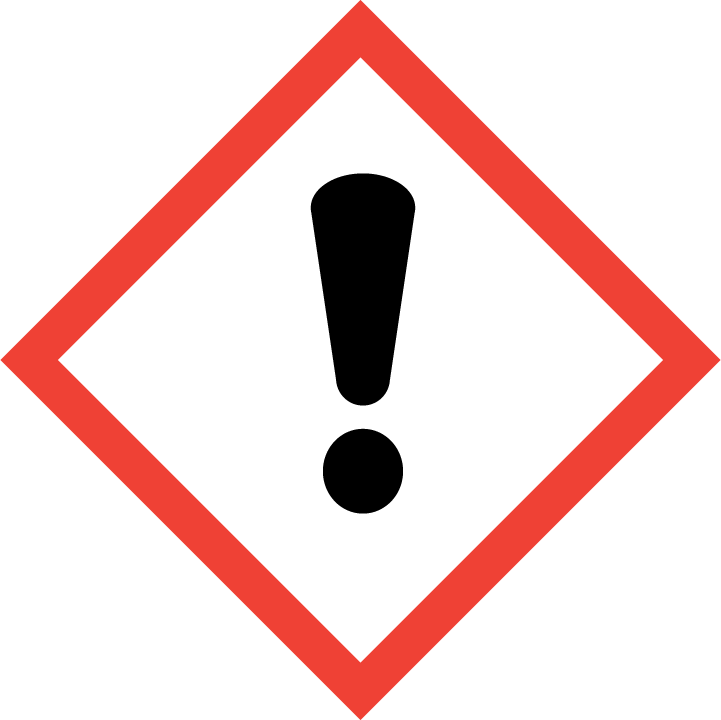
This symbol can indicate:
- Acute toxicity, oral, dermal or inhalation (Category 4)
- Skin irritation (Category 2)
- Eye irritation (Category 2)
- Skin sensitisation (Category 1)
- Specific target organ toxicity, single exposure (Category 3): respiratory tract irritation, narcotic effects
- Hazardous to the ozone layer
Commonly found on: Household cleaning products, some paints and solvents, personal care products, many everyday workplace chemicals
7. Serious health hazard
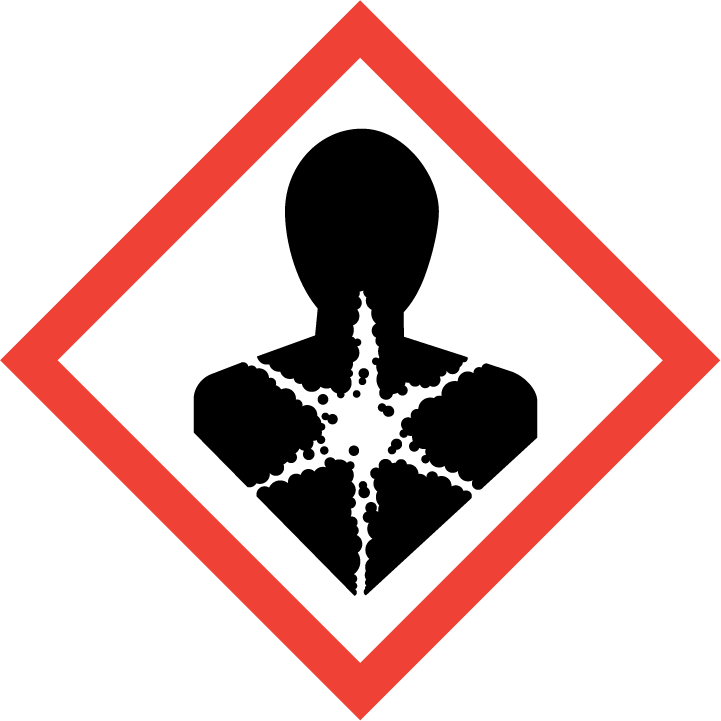
This symbol can indicate:
- Respiratory sensitisation (Category 1)
- Germ cell mutagenicity (Category 1A, 1B, 2)
- Carcinogenicity (Category 1A, 1B, 2)
- Reproductive toxicity (Category 1A, 1B, 2)
- Specific target organ toxicity, single exposure (Category 1, 2)
- Specific target organ toxicity, repeated exposure (Category 1, 2)
- Aspiration hazard (Category 1, 2)
Commonly found on: Certain solvents, asbestos-containing materials, some paints and coatings, industrial chemicals with long-term health implications
8. Environmental hazard
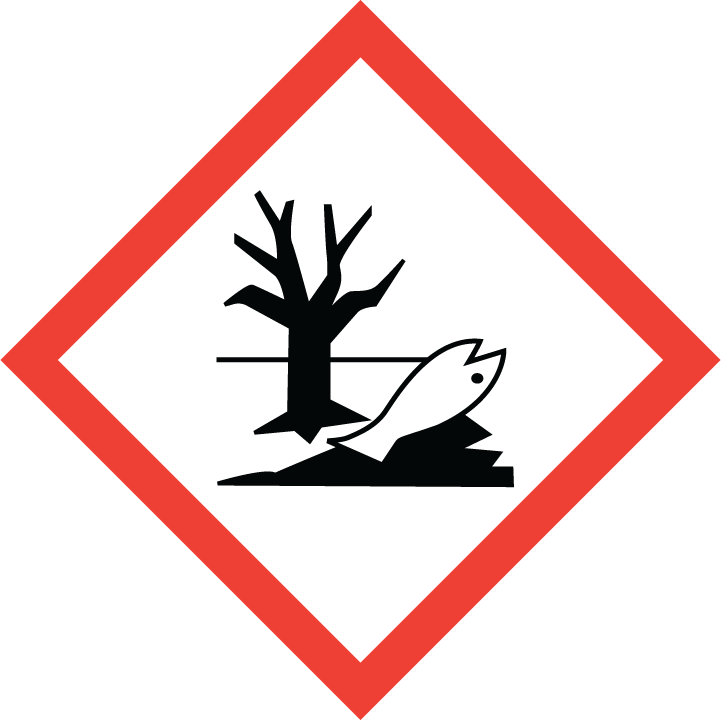
This symbol can indicate:
- Acute aquatic toxicity (Category 1)
- Chronic aquatic toxicity (Category 1 and 2)
Commonly found on: Pesticides, herbicides, certain cleaning agents, fuel additives, some industrial solvents
9. Gas under pressure
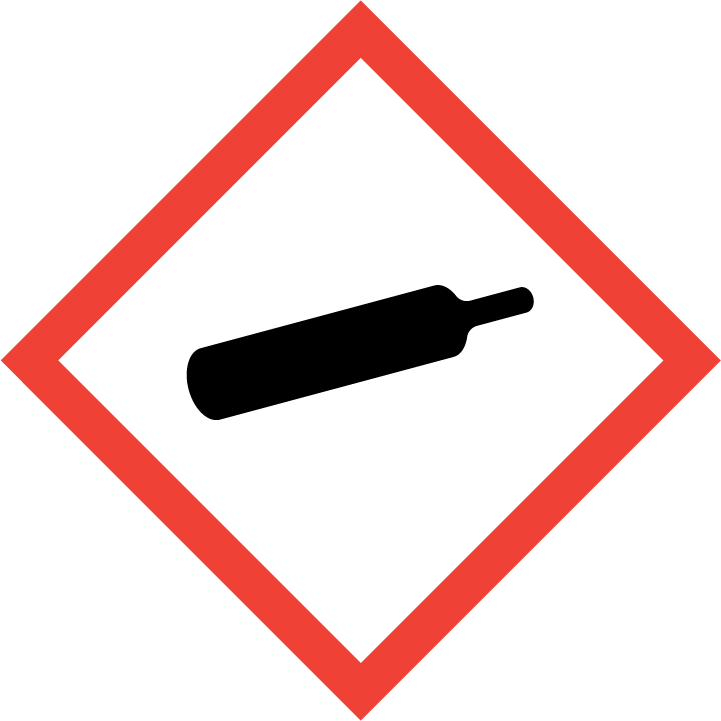
This symbol can indicate:
- Compressed gas
- Liquefied gas
- Refrigerated liquefied gas
- Dissolved gas
Commonly found on: Compressed air canisters, gas cylinders (CO2, oxygen, nitrogen, acetylene), aerosol products, fire extinguishers
Old vs new: CHIP and CLP symbols compared
Workers who have been in industry for a while may still encounter the old orange CHIP symbols on legacy products or older signage. This table shows how the old and new systems map to each other.
| Hazard type | Old CHIP symbol | New CLP symbol | What changed |
| Explosive | Explosive (old orange) | Explosive (CLP) | Direct replacement |
| Flammable | Highly Flammable + Extremely Flammable (2 old symbols) | Flammable (CLP) | Two symbols merged into one |
| Oxidising | Oxidising (old orange) | Oxidising (CLP) | Direct replacement |
| Corrosive | Corrosive (old orange) | Corrosive (CLP) | Direct replacement |
| Acute toxicity | Toxic + Harmful (2 old symbols) | Toxic (skull) + Health hazard (exclamation) | Split into two by severity |
| Health hazard | Harmful/Irritant (old orange) | Health hazard (exclamation mark) | Direct replacement |
| Serious health hazard | Toxic (old orange, some cases) | Serious health hazard (torso) | New symbol added |
| Environmental hazard | Dangerous for environment (old orange) | Environmental hazard (tree/fish) | Direct replacement |
| Gas under pressure | No equivalent | Gas under pressure (cylinder) | Brand new CLP symbol |
Remember, the old orange symbols are no longer valid for products placed on the market after 2017. However, they may still appear on old stock, so it’s useful to recognise them.
Why understanding COSHH symbols matters
COSHH symbols aren’t just there to make labels look official. They’re a critical first line of defence for anyone working with hazardous substances, and misreading or ignoring them can have serious consequences.
- They tell you immediately what type of hazard you’re dealing with, before you’ve even opened a Safety Data Sheet
- They help you choose the right PPE, ventilation requirements, storage conditions, and emergency procedures
- They’re a legal requirement under the COSHH Regulations 2002, and employers must make sure that workers understand what these symbols mean
- They protect not just the person handling the substance, but also colleagues, the public, and the environment
- They support emergency responders, as if an incident occurs, the symbols on a container provide vital information at a glance
Under the COSHH Regulations 2002, employers have a legal duty to assess the risk from hazardous substances, prevent or adequately control exposure, and make sure that employees receive appropriate information, instruction, and training. Being able to recognise and interpret COSHH symbols is a core part of that training.
It’s also worth remembering that COSHH isn’t just for industrial or manufacturing settings. Offices, schools, care homes, hospitality venues, and retail environments all use substances that carry hazard symbols. Cleaning products, printer toner, maintenance fluids, and even some first aid materials can fall under COSHH.
Frequently asked questions
Are the old orange symbols still valid?
No. The old CHIP orange symbols were phased out under the CLP Regulation, with full replacement completed in June 2017. Any product placed on the market after that date must carry the current CLP pictograms with the red diamond border. That said, you may still come across old orange symbols on legacy stock, older equipment, or inherited supplies, particularly in industries where products have long shelf lives. It’s worth knowing both systems but always treat any hazardous substance with appropriate caution regardless of which label it carries.
How many COSHH symbols are there?
There are 9 CLP hazard pictograms used under the current UK COSHH framework.
These are:
- Explosive
- Flammable
- Oxidising
- Corrosive
- Acute toxicity (skull and crossbones)
- Health hazard (exclamation mark)
- Serious health hazard (torso with starburst)
- Environmental hazard (tree and fish)
- Gas under pressure (cylinder).
Some products may carry more than one symbol if they present multiple types of hazards.
What should I do if I see a COSHH symbol?
Firstly, identify which symbol it is and what hazard category it indicates. Then check the product label and Safety Data Sheet for specific guidance on safe handling, storage, disposal, and what to do in an emergency. Make sure you have the right PPE before working with the substance, and always follow your organisation’s COSHH procedures. If you’re unsure about any aspect of handling a hazardous substance, speak to your line manager or Health & Safety lead before proceeding. Never assume a substance is safe just because the packaging looks familiar.
Do COSHH symbols apply to household products?
Yes, many everyday household products carry CLP hazard symbols. Common examples include bleach (which may carry oxidising and corrosive symbols), paint stripper (flammable and corrosive), aerosol sprays (flammable), and some garden products such as weedkillers (toxic or environmental hazard). The same CLP system applies to both consumer and industrial products, which is one of the major benefits of the globally harmonised approach. The symbols mean the same thing wherever you encounter them.
COSHH training from iHasco
Give your team the knowledge they need to work safely with hazardous substances. Our COSHH Training course covers everything from understanding symbols and Safety Data Sheets to carrying out COSHH assessments, all in an engaging, accessible, video-led format.

James Kelly
Senior Scriptwriter
James Kelly is a senior scriptwriter who specialises in turning complex topics into clear, engaging training with a narrative-driven approach.
View James's profile